
Smart Mirror for Wellness Centers: Designing Spaces That Inspire
December 21, 2025
Table of Contents:
- What Is a Smart Mirror for Wellness Centers
- Core Features & Technology of Smart Wellness Mirrors
- User Experience & Engagement in Wellness Spaces
- Use Cases & Design Integration in Wellness Spaces
- Conclusion
- FAQ
Smart mirror for wellness centers solutions are redefining how modern wellness spaces combine design, technology, and human experience. These intelligent mirrors are no longer decorative elements — they function as interactive interfaces that support relaxation, guidance, and engagement. For wellness operators and designers, smart mirrors provide a strategic way to enhance atmosphere, improve service quality, and differentiate premium spaces without compromising aesthetic integrity.
What Is a Smart Mirror for Wellness Centers
A smart mirror for wellness centers is a digital mirror equipped with interactive display technology, lighting control, and connectivity features designed specifically for spa, fitness, and wellness environments. Unlike conventional mirrors, it actively supports wellness activities by delivering content, ambiance, and feedback in real time.
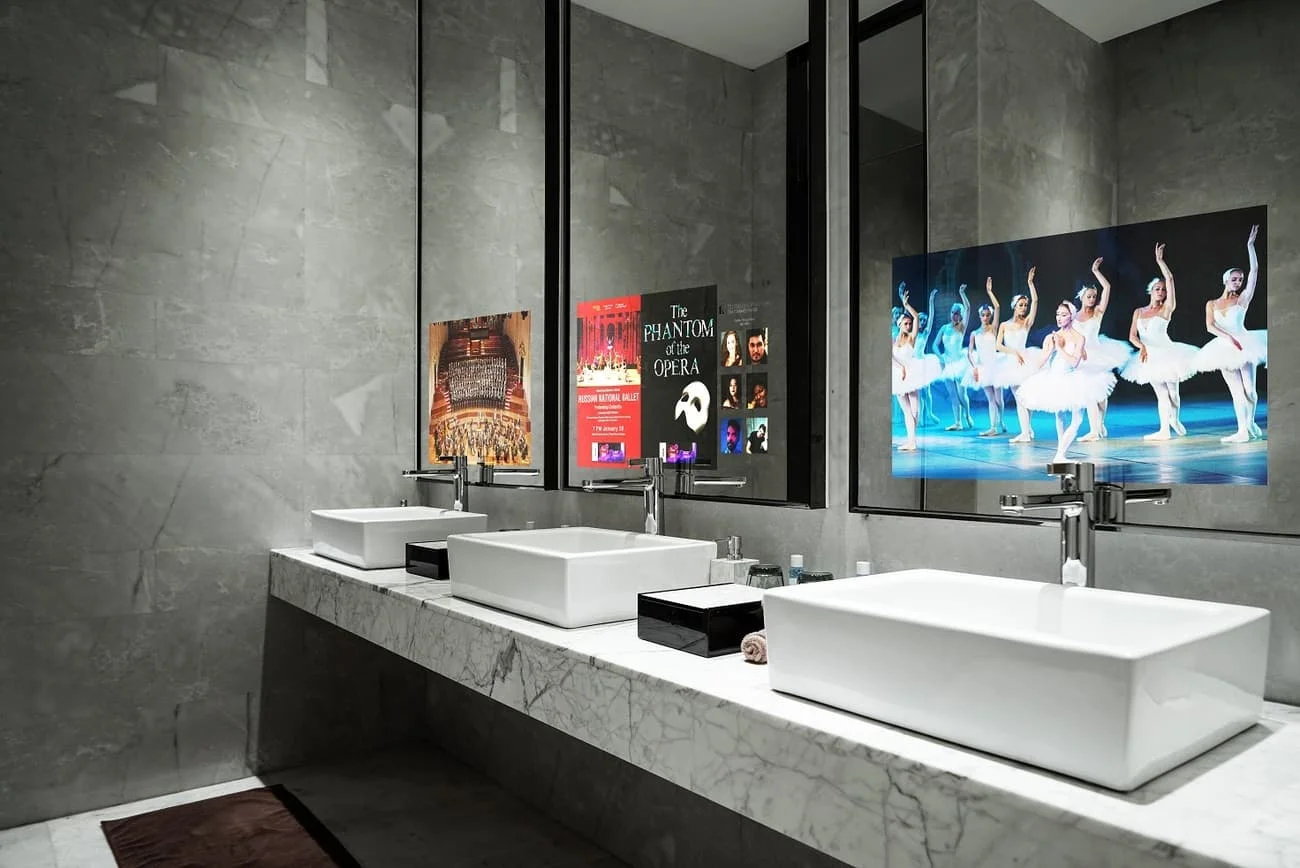
These mirrors integrate high-resolution displays behind reflective glass, allowing information, visuals, or guided programs to appear only when needed. When inactive, they remain visually identical to a traditional mirror, preserving calm and minimalistic interiors. This dual functionality makes them particularly suitable for wellness environments where visual noise must be minimized.
From a functional perspective, a smart mirror acts as a digital layer within the space. It can display guided breathing exercises, yoga flows, or calming visuals while adapting lighting and sound to the session. From a business perspective, it becomes a scalable platform for delivering consistent experiences across multiple rooms or locations.
Core Features & Technology of Smart Wellness Mirrors
Smart wellness mirrors combine multiple technologies into a single, purpose-built interface designed for humid, high-traffic, and experience-driven environments. Their value lies in how seamlessly these technologies work together.
At the hardware level, smart mirrors typically feature commercial-grade displays with Full HD or 4K resolution, protected by tempered or laminated glass suitable for public spaces. Integrated LED lighting systems provide adjustable brightness and color temperature, allowing operators to shift from energizing daylight tones to warm, calming hues depending on the wellness program.
Connectivity is another defining component. Most systems operate via Wi‑Fi or Ethernet, enabling cloud-based content delivery and remote updates. Built-in Bluetooth supports audio playback through integrated speakers or external sound systems. Many mirrors also support touch, proximity sensors, or voice control to reduce physical interaction — an important consideration in shared wellness facilities.
Key technology elements commonly included:
- Interactive display layer. Enables video, instructional content, or ambient visuals to appear within the mirror surface without disrupting design harmony.
- Adaptive LED lighting system. Supports mood regulation, circadian alignment, and visual comfort during treatments or workouts.
- Sensor-based interaction. Uses motion or proximity sensors to activate content only when users are present, conserving energy and reducing distraction.
- Network connectivity and remote management. Allows wellness operators to update programs, visuals, or branding across locations from a central platform.
Together, these technologies transform the mirror into a dynamic wellness tool rather than a static fixture. This integration is what separates wellness-focused smart mirrors from general-purpose digital displays.
User Experience & Engagement in Wellness Spaces
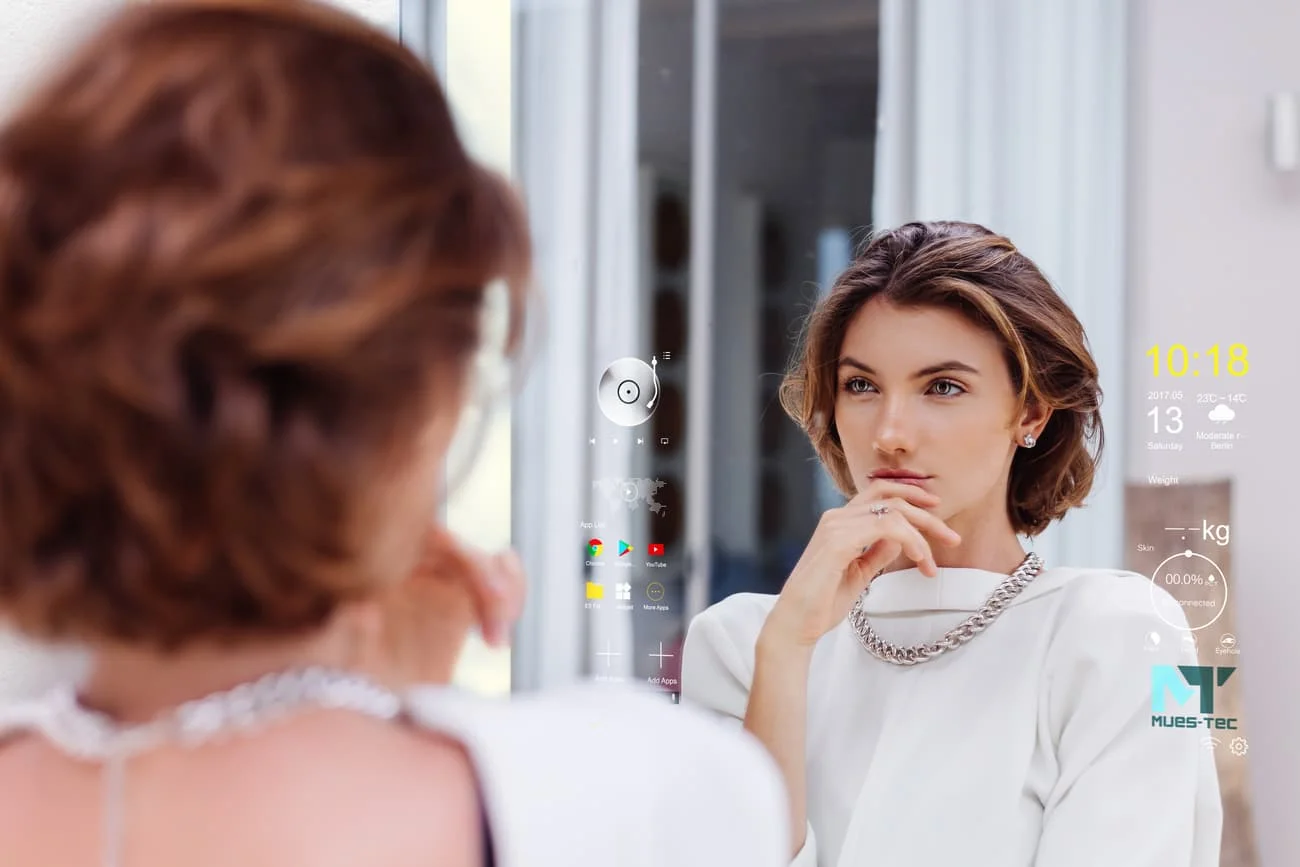
Smart mirrors enhance user experience in wellness spaces by creating intuitive, immersive, and emotionally supportive interactions. Their role is not to demand attention, but to gently guide and enrich the wellness journey.
From the user’s perspective, interaction feels natural and non-intrusive. A mirror may activate automatically as someone enters the room, displaying a welcome message, soft visuals, or session instructions. Touch or voice commands allow users to start a yoga flow, breathing exercise, or meditation without navigating complex menus.
The psychological impact of these interactions is significant. Studies in environmental psychology show that lighting, visual rhythm, and guided content can directly influence stress reduction and perceived comfort levels. According to research published by the National Institutes of Health, controlled visual and auditory stimuli can measurably reduce anxiety and improve relaxation outcomes in wellness settings.
In this context, a smart mirror for wellness centers becomes part of the therapeutic environment rather than a technological distraction. By aligning visuals, sound, and light with the intended wellness outcome, the mirror supports both emotional engagement and physical focus.
User experience benefits delivered by smart mirrors:
- Guided engagement. Step-by-step visual guidance reduces uncertainty and enhances confidence during wellness activities.
Consistent experience delivery. Ensures every guest receives the same quality of instruction and ambiance, regardless of staff availability.
Reduced cognitive load. Minimalist interfaces and automated activation prevent overstimulation in relaxation-focused spaces.
Use Cases & Design Integration in Wellness Spaces
Smart mirrors are highly adaptable and can be integrated across a wide range of wellness environments without disrupting architectural intent. Their flexibility allows designers to treat them as both functional infrastructure and experiential design elements.

Common wellness design applications:
- Spa treatment rooms. In spas and relaxation zones, smart mirrors are often placed in treatment rooms, relaxation lounges, or changing areas. Here, they support calming visuals, ambient lighting transitions, and subtle informational content. For example, a mirror may display breathing guidance before a massage or calming imagery during post-treatment recovery.
- Yoga and movement studios. Digital overlays support technique while preserving mirror functionality. In yoga studios and fitness-oriented wellness spaces, mirrors serve a more active role. They can display posture alignment cues, session timers, or instructor-led content while maintaining full reflectivity. This dual function allows instructors to reduce verbal instruction and focus on personal guidance.
- Wellness hospitality suites. High-end wellness hotels and retreat centers increasingly integrate smart mirrors into private suites. In these contexts, mirrors contribute to a sense of personalization — welcoming guests by name, suggesting wellness programs, or adjusting ambiance based on time of day.
From a design standpoint, smart mirrors support minimalism. Because they replace separate screens, signage, and lighting controls, they reduce the number of visible devices in a room. This consolidation aligns with contemporary wellness design principles that emphasize clarity, balance, and sensory harmony.
Conclusion
Smart mirrors are becoming a foundational element in the design of modern wellness environments. By combining digital intelligence with refined aesthetics, they enable spaces that are not only functional but emotionally resonant.
A smart mirror for wellness centers supports operators in delivering consistent, high-quality experiences while giving designers a versatile tool that aligns with minimalist and biophilic design trends. As wellness continues to evolve toward personalized, technology-enhanced experiences, smart mirrors represent a strategic investment in both inspiration and performance.
FAQ
What makes smart mirrors suitable for wellness environments?
Smart mirrors are designed to integrate seamlessly into calming spaces, offering interactive features without visual clutter. Their ability to combine guidance, lighting, and ambiance supports both physical and mental wellness.
Are smart mirrors safe for humid spa environments?
Yes. Commercial wellness mirrors are built with moisture-resistant materials and safety-rated components suitable for spa and wellness facilities.
Can smart mirrors be customized for different wellness programs?
Most systems allow content, lighting presets, and interfaces to be customized, making them adaptable for yoga, meditation, fitness, or relaxation use cases.
Do smart mirrors require constant user interaction?
No. Many operate automatically through sensors, activating only when needed to maintain a calm, distraction-free environment.
How do smart mirrors support brand identity?
They can display branded visuals, customized welcome messages, and consistent design language across locations, reinforcing a unified wellness brand experience.
Recent articles
December 21, 2025
Smart Mirror for Wellness Centers: Designing Spaces That InspireDecember 17, 2025
Mirror TV for Business: Innovative Display Solutions for Modern SpacesDecember 12, 2025
Best Smart Makeup Mirrors in 2026: Comparing Quality and Functionality